
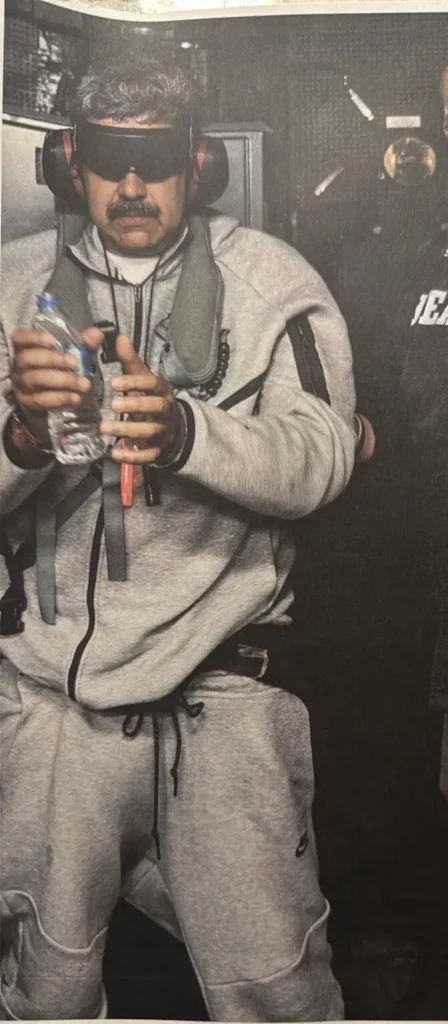
Nicolás Maduro is the former President of Venezuela who rose from being a Caracas bus driver to being the successor of Hugo Chávez, chosen by Chavez himself. After taking power in 2013, his 12-year rule was marked by extreme hyperinflation, allegations of rigged elections, and international indictments for narco-terrorism. On January 3, 2026, he was captured by U.S. forces in “Operation Absolute Resolve” to face trial in New York.
The Humble Beginnings Maduro: A Bus Driver’s Ambition.
Nicolás Maduro Moros was born on 23 November 1962 in Caracas into a working-class family. His father Nicolás Maduro García, was a prominent trade union leader and a “militant dreamer of the Movimiento Electoral del Pueblo (MEP) and died in a road accident on 22 April 1989. His mother, Teresa de Jesús Moros, was born in Cúcuta, a Colombian border town at the boundary with Venezuela. Maduro was raised in Calle 14, a street in Los Jardines, El Valle, a working-class neighborhood on the western outskirts of Caracas. The only male of four siblings, he had three sisters, María Teresa, Josefina, and Anita.
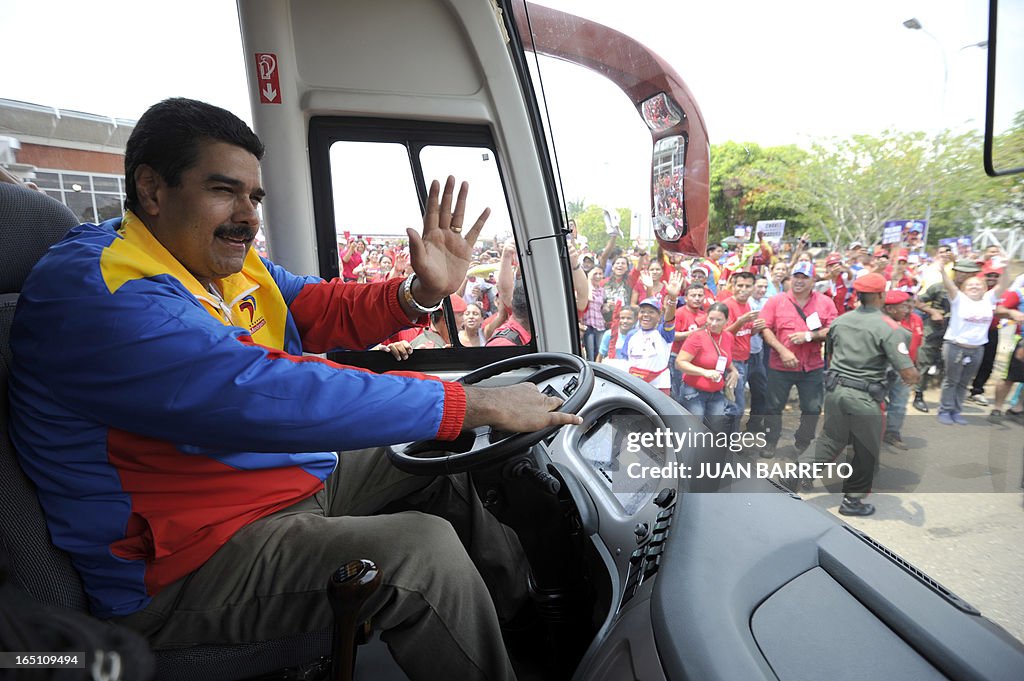
Before he was a world leader, Nicolás Maduro was a man of the people. He started his career as a bus driver for the city’s metro system. It was here that he found his voice as a union leader, fighting for the rights of workers. This background gave him a “street-level” charisma that later helped him connect with the poor and working-class citizens of Venezuela. Even when he reached the highest office in the land, he often reminded the public of his roots, literally driving buses during political rallies to show he hadn’t forgotten where he came from. He was also employed as a bodyguard for José Vicente Rangel during Rangel’s unsuccessful 1983 presidential campaign.
It was reported by The New York Times that he was a follower of Indian Hindu guru Sathya Sai Baba and previously visited the guru in India in 2005.
The Right-Hand Man: Rising Under Hugo Chávez
Maduro’s real political break came through his fierce loyalty to the late revolutionary leader, Hugo Chávez. In the 1990s, Maduro and his wife, Cilia Flores, were instrumental in campaigning for Chávez’s release from prison after a failed coup. Once Chávez became president in 1999, Maduro’s rise was meteoric. He served as the head of the National Assembly and then as the Minister of Foreign Affairs for six years. Because he was always at Chávez’s side, he was eventually named Vice President. In 2013, as Chávez was dying of cancer, he famously looked into the camera and told the nation that if anything happened to him, they must elect Maduro.
The “Cartel of the Suns” and Drug Allegations
Perhaps the most shocking controversy surrounding Maduro is the allegation that he led a massive drug trafficking ring known as the Cartel de los Soles (Cartel of the Suns). The U.S. Department of Justice indicted him in 2020, claiming he used the Venezuelan military to protect cocaine shipments headed for the United States. They even put a $50 million bounty on his head. While Maduro always dismissed these claims as “imperialist lies,” the U.S. government treated him more like a cartel boss than a president, which eventually served as the legal basis for his capture in 2026.
A Trail of Rigged Elections and “Sham” Victories
Maduro’s grip on power stayed firm through what many call “stolen” elections. After narrowly winning his first election in 2013, his later victories in 2018 and 2024 were widely condemned by the international community. In the July 2024 election, despite the opposition showing physical receipts (tally sheets) that proved they won by a landslide, Maduro’s government-controlled election board declared him the winner. This led to massive protests and a brutal crackdown known as “Operation Tun Tun,” where security forces went door-to-door to arrest anyone who spoke out against the results.
| Feature | Official Government Results (CNE Announcement) | Opposition Verified Results (Based on Physical Actas) |
| Declared Winner | Nicolás Maduro | Edmundo González Urrutia |
| Nicolás Maduro Vote Share | 51.20% (approx. 5.15 million votes) | 30.40% (approx. 3.3 million votes) |
| Edmundo González Vote Share | 44.20% (approx. 4.45 million votes) | 67.10% (approx. 7.3 million votes) |
| Other Candidates | approx. 4.6% | approx. 2.5% |
| Basis of Proof | Verbal announcement by CNE President Elvis Amoroso. | Over 25,000 physical tally sheets (representing ~83% of total votes) scanned and published online. |
| Transparency Level | Opaque. The CNE failed to publish precinct-level data to verify their claims, violating Venezuelan electoral law. | Transparent. The opposition created a searchable public database of the original, signed tally sheets. |
| International Recognition | Recognized immediately by allies such as Russia, China, Cuba, and Iran. | Validated as credible by the Carter Center, a UN Panel of Experts, and independent analyses by major global news outlets (AP, NYT, WaPo). |
| Aftermath | The government launched “Operation Tun Tun” to arrest protesters questioning the results. The Supreme Court (TSJ), packed with Maduro loyalists, certified the CNE’s result without showing evidence. | Edmundo González was forced into exile in Spain due to an arrest warrant. The U.S. and EU declared González the rightful winner based on the vote count. |
The Economic Collapse and Human Rights Crisis
Under Maduro’s watch, Venezuela—once the richest country in South America—suffered one of the worst economic crashes in modern history. The currency became so worthless that people needed bags of cash just to buy a loaf of bread. This “hyperinflation” caused a humanitarian disaster, with chronic shortages of food and medicine. According to the United Nations, over 7.7 million people have fled the country since he took office. Investigators also documented “crimes against humanity,” including torture and extrajudicial killings at the notorious “El Helicoide” prison, which became a symbol of his regime’s cruelty.
The End of the Revolution: Operation Absolute Resolve
The era of “Chavismo” under Maduro came to a sudden and violent halt on January 3, 2026. In a daring night-time raid, U.S. Delta Force operators descended on the Fuerte Tiuna military base in Caracas. The operation, which used advanced jamming technology to shut down the city’s power and communications, resulted in the capture of both Maduro and his wife. As he was flown out of the country to face charges in a New York court, the world watched the fall of a man who transformed from a simple bus driver into one of the most controversial figures of the 21st century.