
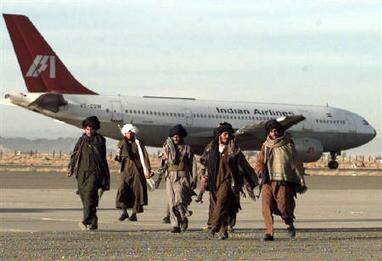
If you’ve recently watched Dhurandhar, you likely felt the suffocating tension of the cockpit. The movie does a brilliant job of capturing the sweat and the fear, but behind the cinematic drama lies a story of two worlds: one where a pilot fought a lone battle in the sky, and another where a government struggled to find its footing on the ground. Also, did the event showed a fiascal planning by the Indian stakeholders?
The Flight That Never Reached Home
It was Christmas Eve, 1999. Indian Airlines Flight 814 took off from Kathmandu’s Tribhuvan International Airport at around 4:00 PM, carrying 190 people, including 11 crew members, back to Delhi for the holidays. Of the 190 people aboard, the majority 154 were Indian and rest were from around the world including Swiss-Italian billionaire Roberto Giori. The mood was festive, the cabin was quiet, and for the first hour, it was just another routine flight.
But as the plane entered Indian airspace over Lucknow, the holiday spirit was shattered. Five masked men, led by a man code-named “Burger,” stood up with grenades and knives. In seconds, the cabin became a war zone. The hijackers stormed the cockpit, and the pilot, Captain Devi Sharan, felt the cold steel of a blade against his neck. Their command was simple but terrifying: “Head for Lahore.”
What the hijackers hadn’t planned for was a pilot who refused to be a passive victim.
The 47 Minutes That Could Have Changed Everything
In the history of the Flight IC 814 crisis, the 47 minutes the plane was on the tarmac in Amritsar remain the ultimate “what if.” If a successful rescue operation had been carried out here, the week-long nightmare in Kandahar—and the subsequent release of high-profile terrorists—would never have happened.
The Pilot’s Gamble
This window of opportunity was “stolen” or let’s say solely created by Captain Devi Sharan. When Pakistan refused landing and switched off all airport lights, Sharan convinced the hijackers that the plane would literally fall out of the sky unless they landed in Amritsar to refuel.
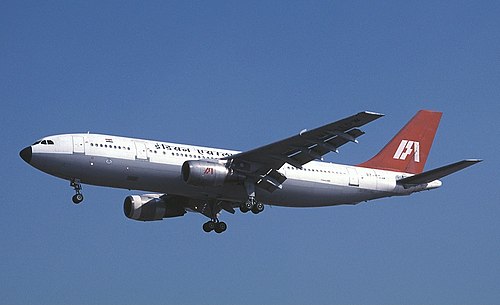
Once on the ground, he did everything to keep it there. He flew a slow approach to eat up time and sent coded signals to Air Traffic Control (ATC), claiming he had “only 15 minutes of fuel” left. He was practically begging the ground teams to block the runway and storm the aircraft.
The Systemic Collapse
While the pilot was risking his life to buy the government a chance, the response on the ground was a masterclass in bureaucratic paralysis.
- The “Fake” Refueling: Sharan kept telling the hijackers the fuel was coming. But in Delhi, the Crisis Management Group was stuck in endless debate.
- The Tanker Fiasco: When a fuel tanker was finally sent to block the plane’s path, the driver was told to move “slowly.” The movement was so hesitant that the hijackers realized it was a ruse.
- The Fatal Hesitation: No one gave the order to shoot the tires or use heavy fire tenders to permanently ground the plane. Sensing a trap, the hijackers panicked and fatally stabbed Rupin Katyal and forced Sharan to take off without clearance. The “Golden Window” had had now closed.
The Dubai Masterclass: A Lesson in Leverage
The plane eventually reached Al Minhad Air Base in Dubai, and it was here that the world saw the sharp contrast between hesitation and decisive action. Unlike the confusion in Amritsar, the UAE officials used a sophisticated “carrot-and-stick” strategy.
While India was still debating who was in charge, Dubai’s authorities established a clear line of communication. They played a tactical game: they agreed to refuel the plane, but only on the condition that some passengers were released.
Through firm, cold-blooded negotiation, they managed to secure the release of 27 passengers, including women and children, and the removal of Rupin Katyal’s body. They didn’t just “ask”; they created a trade-off where the hijackers had to give something to get the fuel they needed. This remains the only successful rescue of hostages during the entire seven-day ordeal. Once the plane left Dubai and landed in Kandahar, the mission changed from a rescue to a surrender. Dhurandhar portrays the desert landscape as a prison.
The Long Shadow
The comparison between Amritsar and Dubai is painful. But it should be kept in mind that authorities in Dubai did not have much to lose as majority of the passengers aboard were of Indian nationality. Be that as it may, we still cannot look past the tactical and decision making failure that allowed the plane to take off from Amritsar for Dubai. The hesitation in Amritsar eventually led to the release of terrorists like Masood Azhar—men who would go on to orchestrate attacks from the Indian Parliament to Pulwama.
Today, every time you see a Sky Marshal on a flight or go through rigorous airport security, you are seeing the legacy of those seven days. Dhurandhar gives us the drama, but the real story of Captain Devi Sharan reminds us that in the face of terror, the first hour—those 47 minutes—is the only hour that truly matters.